Showing posts with label research. Show all posts

24 June 2014

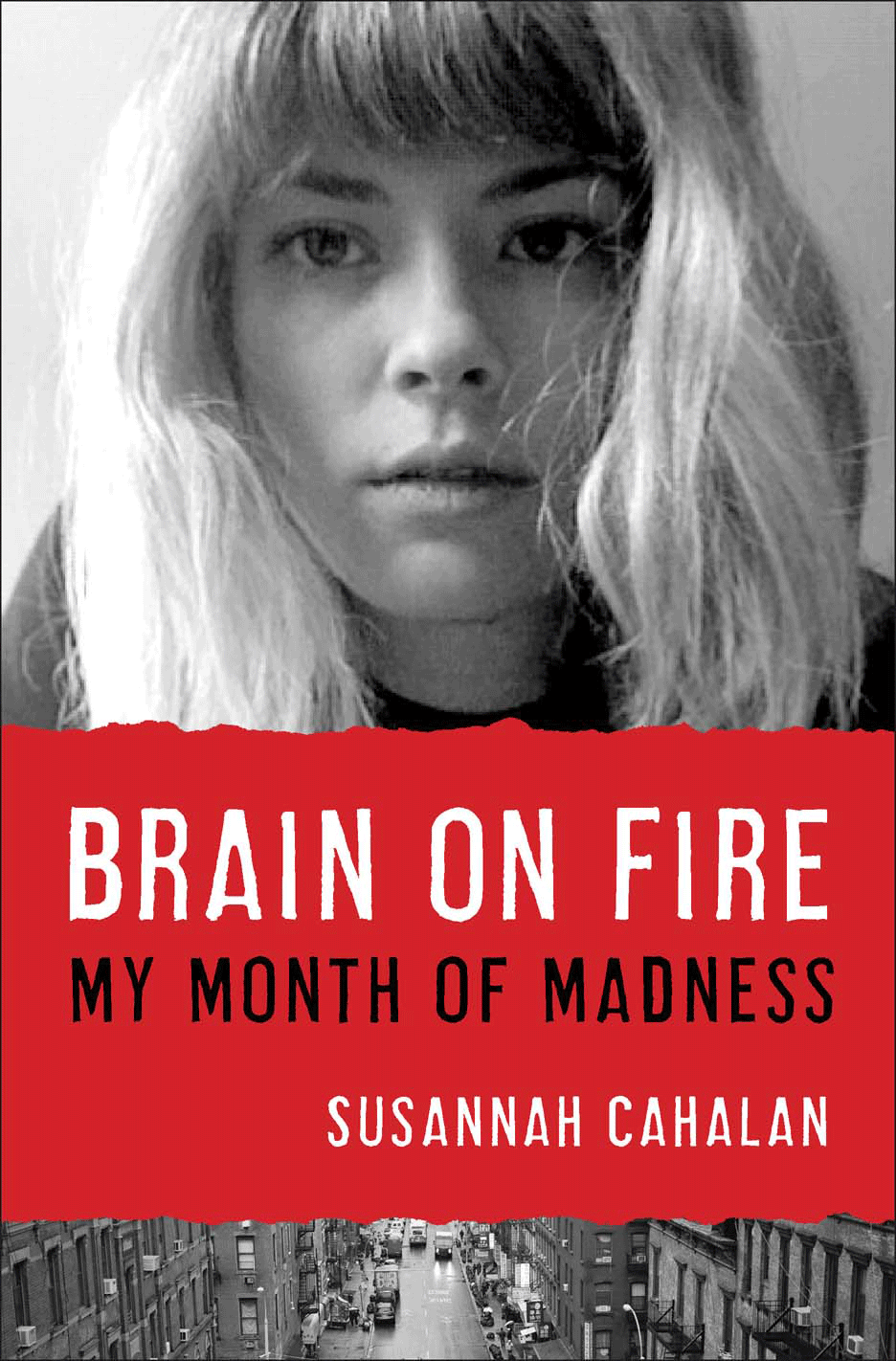
Brain on Fire by Susannah Cahalan

Source

I began reading this book yesterday, partly the reason for the lack of blog post. The novel is a self-written case-study of Susannah Cahalan's "month of madness" in which she succumbs to an illness unknown by many healthcare professionals. Fortunately for Cahalan, a doctor on her team of practitioners was familiar with a contemporary study that identified the cause of a certain set of symptoms in young women.

Cahalan describes her symptoms as she lived through them. Although she does not remember much about her experience in total, she combines snippets of memories with extensive research into her case. She relies on several friends, family members, and healthcare providers' recollections and documents recorded during her period of illness to fill in the gaps. The result is a tale of determined young woman battling an illness that nearly claimed her life.

Source

As much as I want to go into details about the novel, I will leave it up to the discretion of the reader. It can be heartbreaking and hard at times to read, but it is well worth the time spent on it. I will, however, discuss a detail Cahalan writes about her neurologist. In discussing her case with the neurologist, he states he is unfamiliar with her diagnosis - despite it being publicized nearly everywhere in the media and in various journals of medicine for the last few months.

It is a fact that medicine is constantly evolving. Healthcare practitioners are (and rightly so) expected to follow the latest developments in medicine. Not only should healthcare providers be up-to-date with contemporary practices, they should understand them as well. Without understanding the developments, healthcare practitioners increase the risk of misdiagnosing their patients and decrease the level of care they provide.

Source
Although healthcare practitioners are required to continue their education, the most valuable practitioners will be the ones who actively seek to learn despite the various time and energy constraints all healthcare practitioners face. Ultimately, the importance of a doctor lies in their knowledge of medicine and humanity than their academic achievements.

21 October 2013

Why I Like Working.

I sheepishly checked in with my "boss" this morning, a nursing professor, wondering if I had missed anything while I was sick. I had not received any emails nor had there been anything left for me in my box. She says to me, "Oh, no, I just didn't want to give you things to do while you were sick and getting through midterms." WHAT. A. SWEETHEART.

First of all, Linfield professors are the best. Secondly, people like her are why I like working.

I do not know if it is my sparkling personality (wink), but the people I have worked for have not been especially disagreeable. So far. (Knock on wood.) In fact, most of my bosses I have gotten on well with. My grandfather, Guello, used to tell me to make the most of whatever job I get and always strive to do the best job I can. The best-foot-forward attitude was emphasized by my Jesuit-Catholic education in which we were encouraged by the motto ad majoram dei gloriam, meaning, "for the greater glory of God."

As far as making the most of my current job, I am very pleased with how flexible it is with my busy schedule. Knowing that my professor will adjust my workload based on my schedule is a huge relief! Now that I am healthy again and past a couple midterms, I am back to a full workload including researching books and articles on various topics related to nursing.

Researching is fun! I am enjoying the challenge of finding the most relevant and contemporary studies. I actually read through them too - partially to see how best my professor may use them in her course and partially because I become curious about the study.

This job may prove the best yet - I have learned so much already from flipping through packets for class I copied! It may be nerdy, but I really like academic work.

18 October 2013

It's Been a Rough Week.

This week has challenged me more mentally and physically than any other week of nursing school. Returning from my relaxing week back home, I literally hit the ground running - I was going to miss the streetcar and have to wait another twenty-something minutes for the next one. I had several meetings scheduled and events to arrange as well as homework and working out. Yet with all that I am doing, I could not outrun the cold that is going around campus. I am currently fighting, tooth-and-nail to get over it, but for some reason, I cannot shake it! I need not tell you how FRUSTRATING IT IS.

With all that is going on, I am more frustrated with the sources of my friends' worries. One of the biggest concerns has been clinical sites that lack concern for residents to the extent that the residents are not receiving adequate care. Another concern has been our research course, which does not seem to satisfactorily prepare nursing students for the papers assigned. The last major concern has been keeping track of all the assignments due for each class. Although it does not seem like a significant concern, the Linfield nursing curriculum is linked with four classes a semester that must be taken concurrently and sometimes course assignments seem to run into each other because they are similar in topic.

 It is unfortunate that some clinical sites do not provide adequate care for its residents, however, as nursing students we should take that upon ourselves to make a good example. This is what we are taught to do - to develop our critical thinking skills and make the healthcare community better as best as we can! It seems daunting for a first semester nursing student, but we are also adults with two years of education behind us.

As far as our research course goes, I applaud students' efforts to go above and beyond realistic expectations of educational standards of nurses. Not many nursing students will go into research, but they still feel the need to learn the material. The students are struggling to write a literature review. Not only have we had very little experience with APA formatting, we do not understand the structure of a literature review. It is one thing to have very little instruction but plenty of resources and it is another thing to have very little instructions and very little resources. Fortunately, students have bonded together and commiserated over the lack of collective knowledge.

The last concern my friends' had was over the seemingly haphazard scheduling of assignments. One piece of advice given to us at orientation was to write all the assignments and projects out in our planners so we would always have a complete reference. The unfortunate part of this, is that professors often rearrange schedules and accommodate to the learning styles of each class. This can form a jumble of problems for those nursing students who like to have clearly defined schedules.

I apologize for my rant, I just want people to realize that nursing students are humans too. My friends and I are all compassionate people that want to be the best nurses, and people, we can be. Nursing school is challenging me in ways I had not even imagined - and it is only the first semester! If all weeks are like this, I may need more support, but I refuse to give in and fall into the monotonous stereotype of a nurse. I am not going to college, putting in this much work, and drinking this much caffeine to end up like that.

14 October 2013

Heurme- What? Mixing Anthropologic and Nursing Research

Today in my scholarship of nursing class we discussed at length the different types of qualitative research and some of their methods. It was exhaustive - and I am still get confused on what the difference between interpretive, heuristic, and heurmenuitics is! What was most annoying was my professor continually interjecting that we do not necessarily need to know further detail into the area we were studying or confused about unless we go into research.

Anyway, it reminded me of anthropological studies and how anthropologists conduct ethnographic research. It makes so much more sense to me from an anthropological perspective than from a nursing perspective! Nursing research makes me wonder whether I would have been better off as an anthropologist. I enjoy the idea of research, but the thought of obtaining a statistician simply because I cannot understand the reasoning behind the math irritates me. I would rather just do it myself instead of having someone tell me what to do.

The fact that (1) I could not grasp all of the concepts based on what my professor was lecturing and (2) my professor refused to answer questions that lead to a more in-depth explanation of the concepts that I did grasp initially discouraged me from wanting to pursue more information about nursing research. Then it occurred to me that my understanding of anthropological research might actually help me understand nursing research more than I thought. I have scheduled a meeting with my professor so I can express my confusion and interest in learning more about research. I am sure my professor will be confused by my persistence of the topics we were discussing in class today and will dissuade me from questioning the concepts we "do not necessarily need to know," but I hope he will dismiss my inquisitiveness as characteristic of a proper college student.

Who knows? Maybe in the future I will conduct research and implement both anthropological and nursing processes in my studies.