Showing posts with label education. Show all posts

24 June 2014

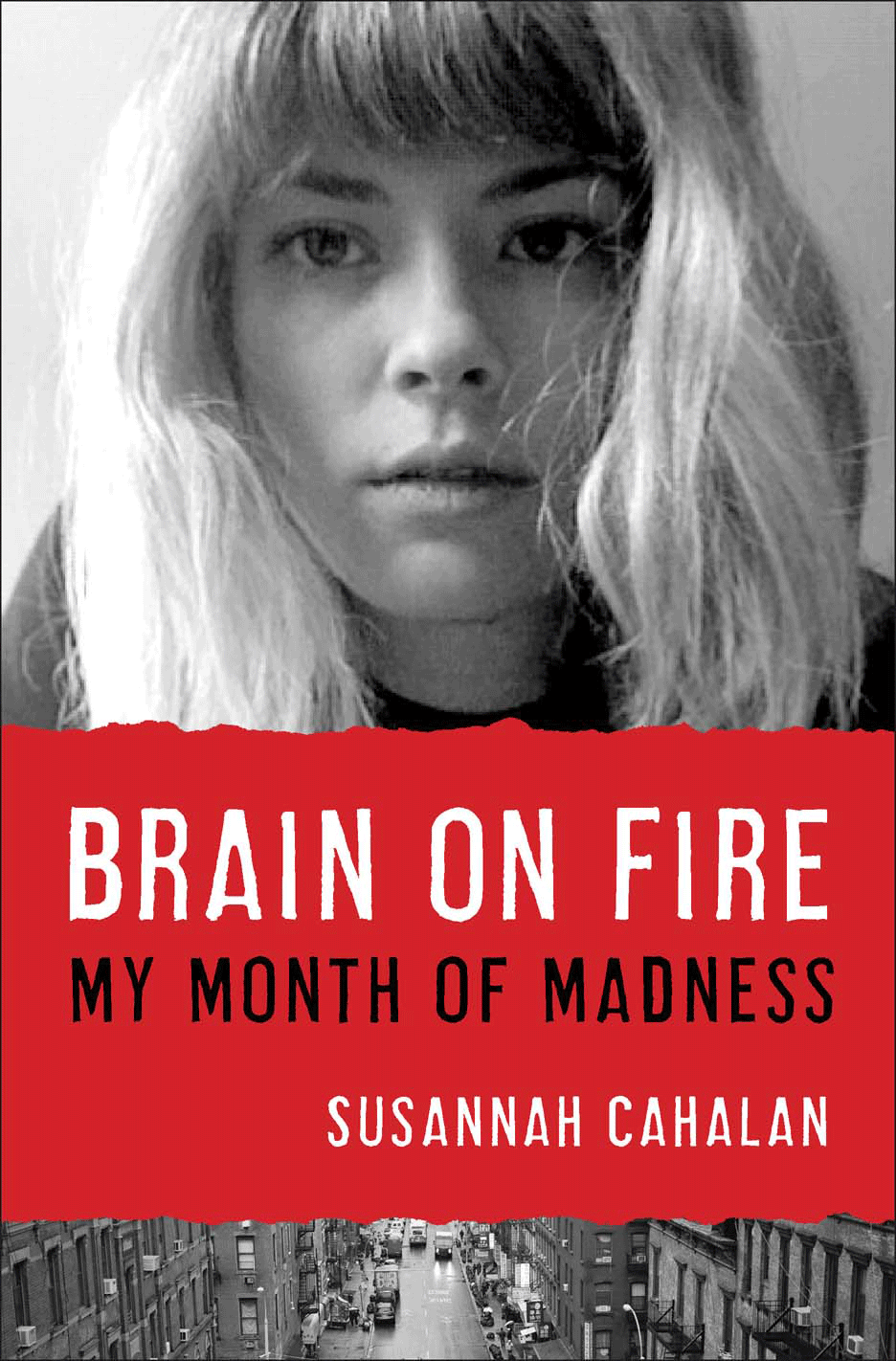
Brain on Fire by Susannah Cahalan

Source

I began reading this book yesterday, partly the reason for the lack of blog post. The novel is a self-written case-study of Susannah Cahalan's "month of madness" in which she succumbs to an illness unknown by many healthcare professionals. Fortunately for Cahalan, a doctor on her team of practitioners was familiar with a contemporary study that identified the cause of a certain set of symptoms in young women.

Cahalan describes her symptoms as she lived through them. Although she does not remember much about her experience in total, she combines snippets of memories with extensive research into her case. She relies on several friends, family members, and healthcare providers' recollections and documents recorded during her period of illness to fill in the gaps. The result is a tale of determined young woman battling an illness that nearly claimed her life.
Source

As much as I want to go into details about the novel, I will leave it up to the discretion of the reader. It can be heartbreaking and hard at times to read, but it is well worth the time spent on it. I will, however, discuss a detail Cahalan writes about her neurologist. In discussing her case with the neurologist, he states he is unfamiliar with her diagnosis - despite it being publicized nearly everywhere in the media and in various journals of medicine for the last few months.

It is a fact that medicine is constantly evolving. Healthcare practitioners are (and rightly so) expected to follow the latest developments in medicine. Not only should healthcare providers be up-to-date with contemporary practices, they should understand them as well. Without understanding the developments, healthcare practitioners increase the risk of misdiagnosing their patients and decrease the level of care they provide.

Source
Although healthcare practitioners are required to continue their education, the most valuable practitioners will be the ones who actively seek to learn despite the various time and energy constraints all healthcare practitioners face. Ultimately, the importance of a doctor lies in their knowledge of medicine and humanity than their academic achievements.

21 June 2014

Universal Class

As I mentioned this past week, I have been exploring Scout, a Pierce County Library System online program for adults. In my exploration, I have discovered an online education website that is free through the library. I knew Tacoma Library System had it, but I did not know that PCLS did - as you can imagine, I was ecstatic!

The name of the website is Universal Class. If you have a Pierce County Library card, you should be able to access it for free. I hope that this information will be useful to those in Pierce County as well as those who may be interested to see if this option is available through the local public library system.

Source

I have been trying to keep up with my study habits this summer and thought, "what better way than to use online education?" I browsed the website for the kinds of courses it hosts and almost immediately signed up for Prenatal Care. I wanted to see what the courses would be like and thought the prenatal class would give me a good head-start on next semester's rotation through labor and delivery.

The courses are designed for anyone with a high school education and offer unlimited time for completion. In every lesson, there is the information which can be printed for later use as well as an exam (that is more like a quiz in my opinion). Some lessons have assignments which have the student review what has been discussed in the lesson. Some courses have more lessons than others. The course instructors tend to answer emails and return grades in a timely manner. The longest I have had to wait for a response was two days - and that was over a weekend.
Currently I am taking Organic Chemistry 101, Alzheimer's Disease 101, and All About Herbs. I have completed Prenatal Care and am concurrently taking a nutrition class through the Tacoma Public Library System's online education website.

04 April 2014

Intensive Care by Echo Heron

There is so much I can say about this novel, but for the sake of time and to entice more readers I will only speak to a few main points I took from it.

One of the first things I would like to point out is that Echo was a mother while also going through nursing school. She raised her child to the best of her ability and did have some "real-life" events that threw her off her guard at points. The fact that she included these life events in her book as well really influenced my perspective of her as a nurse and her as an author. 

It truly is easy to become swept up in the grandeur of medicine and forget about the bad days, hard decisions, and inevitable consequences of others' decisions. Intensive Care is a great reminder of the challenges nurses face. It is also a gleaming example of all that is important about nursing. The compassion Echo shows her clients is incredible! I think every nurse strives to provide the best care for their patients and the stories Echo shares are only a few examples of the ways we can do so.

That being said, I encourage all healthcare providers and families of healthcare providers to read this in order to gain a deeper insight into one woman's perspective of the healthcare industry. It hopefully will gain us nursing students some compassion and nurses a little more respect than frequently experienced.

28 January 2014

Liberal Arts

This topic stems from the movie Liberal Arts, staring How I Met Your Mother star Josh Radnor. The film details the unlikely relationship between Jesse and Zibby, an alumnus and current student of the same college. Though the years between them span more than a decade, Zibby and Jesse are kindred spirits. Jesse, however, has reservations about their relationship and the two ultimately make the difficult decision whether to continue seeing each other or not.

One amusing part of Liberal Arts was the conversation Jesse and Zibby have about presumably a Twilight-esque fiction novel. Jesse repeatedly voices his dislike for the novel and implores Zibby to provide one good reason she enjoys it. The book in question apparently is not well written nor provides any literary significance, yet is well liked by millions of readers. Jesse questions the readership and, in essence, Zibby's maturity, simply because her views differ from his. Zibby rejoinders with the point of a liberal arts education - meeting and disagreeing with people.

What is the point of a liberal arts education? I always took liberal arts education to mean that I could take whatever classes I wanted in addition to the classes toward my major. I looked for and applied only to liberal arts colleges and ultimately decided on a nursing program that would seemingly allow me to complete a minor and study abroad.

Although my sister attended college a couple years before me, her collegiate career was much different from mine. I figured out soon enough that things were not going to work out the way I had planned. I ended up having to put up a little extra work to complete my minor and I am working on studying abroad for January Term of next year.

Now, after two and a half years of college, I consider Liberal Arts as having various means of communicating and discussing different points of view. There are all kinds of courses, clubs, events, and activities offered to students and oftentimes are a prime topic of conversation. As strange as it sounds, I enjoy disagreeing with people and being able to discuss why. It is invigorating and empowering and I suggest it be attempted daily for premium health and wellness.

08 January 2014

Insomnia, Colds, and Resilience

Today, like many other days, was uneventful. I spent most of it holding my sick brother and reading while a movie played in the foreground and the rain fell outside. Saul's coughs were the only thing that shattered the stillness.

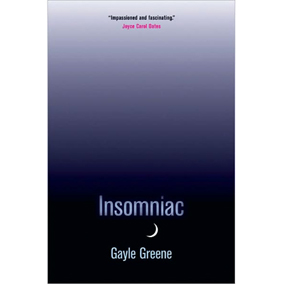
I am currently reading a book about insomnia. I have been struggling with sleep the last few months and thought that the book would be a nice educational interlude to my feast of fiction novels during the month of January. The book, Insomniac by Gayle Greene, discusses the many aspects surrounding sleep and insomnia and is a great resource to those interested in learning more about such topics.

One of the reoccurring statements the author makes about insomniacs is their resilience. As a person who struggles watching others' suffering (whether that is due to my profession or some innate characteristic bestowed on me at birth), I ache for the people described in the book to be struggling to find jobs and doctors that will help them manage their insomnia. I suppose the point I am trying to make is that though they struggle to make it through the day, they try to do so. 

I am not naive to think that if one is sick, one might certainly rest. Having attended school and work while battling illness, I know taking time off for healing is not always feasible and I understand that illness and health mean different things to different people, however, I commend those that are focused on returning to health and/or do not accept the condition as part of life.

Watching my brother sleep while a mild fever ran rampant through his body and his coughs strained to remove the buildup in his lungs was enough for me. I know colds come and go and each time our bodies become more resilient to the virus, but it was hard to watch it manifest in a lack of appetite and energy (two things my brother is not known for). It seemed as though my brother had suspended his healing process and it made me far more protective than I normally would have been. Hopefully he will be feeling better (physically and mentally) tomorrow.

18 October 2013

It's Been a Rough Week.

This week has challenged me more mentally and physically than any other week of nursing school. Returning from my relaxing week back home, I literally hit the ground running - I was going to miss the streetcar and have to wait another twenty-something minutes for the next one. I had several meetings scheduled and events to arrange as well as homework and working out. Yet with all that I am doing, I could not outrun the cold that is going around campus. I am currently fighting, tooth-and-nail to get over it, but for some reason, I cannot shake it! I need not tell you how FRUSTRATING IT IS.

With all that is going on, I am more frustrated with the sources of my friends' worries. One of the biggest concerns has been clinical sites that lack concern for residents to the extent that the residents are not receiving adequate care. Another concern has been our research course, which does not seem to satisfactorily prepare nursing students for the papers assigned. The last major concern has been keeping track of all the assignments due for each class. Although it does not seem like a significant concern, the Linfield nursing curriculum is linked with four classes a semester that must be taken concurrently and sometimes course assignments seem to run into each other because they are similar in topic.

 It is unfortunate that some clinical sites do not provide adequate care for its residents, however, as nursing students we should take that upon ourselves to make a good example. This is what we are taught to do - to develop our critical thinking skills and make the healthcare community better as best as we can! It seems daunting for a first semester nursing student, but we are also adults with two years of education behind us.

As far as our research course goes, I applaud students' efforts to go above and beyond realistic expectations of educational standards of nurses. Not many nursing students will go into research, but they still feel the need to learn the material. The students are struggling to write a literature review. Not only have we had very little experience with APA formatting, we do not understand the structure of a literature review. It is one thing to have very little instruction but plenty of resources and it is another thing to have very little instructions and very little resources. Fortunately, students have bonded together and commiserated over the lack of collective knowledge.

The last concern my friends' had was over the seemingly haphazard scheduling of assignments. One piece of advice given to us at orientation was to write all the assignments and projects out in our planners so we would always have a complete reference. The unfortunate part of this, is that professors often rearrange schedules and accommodate to the learning styles of each class. This can form a jumble of problems for those nursing students who like to have clearly defined schedules.

I apologize for my rant, I just want people to realize that nursing students are humans too. My friends and I are all compassionate people that want to be the best nurses, and people, we can be. Nursing school is challenging me in ways I had not even imagined - and it is only the first semester! If all weeks are like this, I may need more support, but I refuse to give in and fall into the monotonous stereotype of a nurse. I am not going to college, putting in this much work, and drinking this much caffeine to end up like that.

14 October 2013

Heurme- What? Mixing Anthropologic and Nursing Research

Today in my scholarship of nursing class we discussed at length the different types of qualitative research and some of their methods. It was exhaustive - and I am still get confused on what the difference between interpretive, heuristic, and heurmenuitics is! What was most annoying was my professor continually interjecting that we do not necessarily need to know further detail into the area we were studying or confused about unless we go into research.

Anyway, it reminded me of anthropological studies and how anthropologists conduct ethnographic research. It makes so much more sense to me from an anthropological perspective than from a nursing perspective! Nursing research makes me wonder whether I would have been better off as an anthropologist. I enjoy the idea of research, but the thought of obtaining a statistician simply because I cannot understand the reasoning behind the math irritates me. I would rather just do it myself instead of having someone tell me what to do.

The fact that (1) I could not grasp all of the concepts based on what my professor was lecturing and (2) my professor refused to answer questions that lead to a more in-depth explanation of the concepts that I did grasp initially discouraged me from wanting to pursue more information about nursing research. Then it occurred to me that my understanding of anthropological research might actually help me understand nursing research more than I thought. I have scheduled a meeting with my professor so I can express my confusion and interest in learning more about research. I am sure my professor will be confused by my persistence of the topics we were discussing in class today and will dissuade me from questioning the concepts we "do not necessarily need to know," but I hope he will dismiss my inquisitiveness as characteristic of a proper college student.

Who knows? Maybe in the future I will conduct research and implement both anthropological and nursing processes in my studies.

10 October 2013

Oh My.

It is definitely getting busier and busier here in nursing school - we are past the introductory stage and into the learn-what-you-want-to stage. As stressed as I may feel, I know it is only because I am pushing myself to get things done ahead of time so I have time to catch up if I have questions or if I want to look up other related things. For instance, the other day in class we watched part of a YouTube video on congestive heart failure (CHF). Our professor showed it to us because of its relation to ineffective tissue perfusion (oxygen not getting to the body parts that need it), but I was really interested in it because I know someone who suffers from CHF so I "wasted" 10 minutes watching the rest of the video after class.

Even today at clinical I felt like I was bustling about the entire time - because I was! I had the opportunity to speak with the physical therapist, occupational therapist, and each of the nurses and CNAs. I also was able to help with perineal care, wound care, physical therapy, toileting, showering, feeding, and drug administration. I even had time to conduct a full health assessment (including vital signs; listening to bowel, lung, and heart sounds; and skin assessment) and work on paperwork on my resident for IEL!

I kept myself as busy as I could (1) because everything is still pretty new to me and (2) I wanted to have as many experiences as I could within the few weeks we have left. Needless to say, I am exhausted and it FEELS SO GOOD!

09 October 2013

Nursing Diagnosis

Earlier this morning my friend and I were discussing other majors we would be if we could be more than one major. The self-imposed limit was four, so I chose five:

  1. Athletic training
  2. Anthropology
  3. Psychology
  4. Creative Writing
  5. Microbiology
Sitting in the fading light of the afternoon helped me contemplate why I was not a double major. There were the obvious reasons (financial, temporal, etc.), but I kept returning to a thought I have had more and more frequently - there is too much to know. With whatever subject topic, there is literally too much to know. 

For instance, before I reflected on the previously mentioned conversation I was becoming increasingly overwhelmed with the amount of work I had to accomplish before the weekend. Added to the stress, I also felt the pressure of having to complete a major health requirement for clinical when I did not have the adequate level of health literacy to do so. (I'll talk about health literacy tomorrow. Point being, my anxiety level was high.) I could not imagine completing and being able to properly understand it all. There was too much to learn! 

My dilemma reminded me of a book I read over the summer called Too Big To Know which discussed the difficult topic of knowledge. It was a bit of a tough read conceptually, but it flowed well. I definitely recommend it for intellectual stimulation. Anyway, it talked about how knowledge has more depth now than ever before because of the increasing amount of knowledge available world-wide. It is actually rather mind-blowing. The book made it a point to reassure its readers that no matter how many books, articles, webpages, so on and so forth one reads, one will never be a know-it-all. As weird as it sounds, thinking about the book and all that it had to say calmed me and helped me focus on the tasks at hand. 

Oh the strange things I think about...

08 October 2013

Activism in the Form of Love

Today I began writing a letter to the store manager of a Starbucks near Linfield. Why? Well, because I love my friends.

Ladies and gentlemen, meet my friend Millygoat.
She's a sweetheart in every sense of the word.
She loves nature and being active.
She's crazy... adorable.
She's also small.
Imp-like.
Little.
AND I LOVE HER!
My friend Milly is an impish young woman I met briefly at a pre-college gathering in Seattle. A year or so later, Milly and I reconnected on a whole other level. One of the many special things about Milly is that she is extremely allergic to several things. She is especially allergic to dairy.

Long story short, the aforementioned Starbucks served Milly milk instead of soy, not once, but on three separate occasions. Milly knows how to handle these kinds of situations - she simply popped some Benadryl and explained to the baristas the mishap. The baristas only offered to make her a new drink. The serious harm that could have come to my friend due to the mishap is primarily the reason I am writing the letter.

I do not want to immediately assume the mishaps were due to carelessness. I know mistakes happen - it is a fact of life. I also understand that some people simply like the taste of soy and do not have dietary restrictions like Milly's, however, I am outraged that the baristas treated it with nonchalance. I had hoped they would realize the seriousness of the situation and offer assistance of some kind, not simply another beverage. The fact that this particular location was the site of the other two mishaps alarmed me. I wonder if the baristas realized the gravity of the situation - Milly's health and safety was compromised due to simply using the wrong substance.

I find it unacceptable as a business to have such poor service. I know there are others like Milly that are lactose intolerant and suffer from mistakes baristas make and I say enough is enough. People need to know that food allergies are important and need to be treated as such. No one's loved ones should not have to be subjected to more discomfort than they have to, especially with something as basic as food.

I am following Milly's lead and avoiding the Starbucks, but I did not think that was enough. I thought the store manager ought to know the reason it lost our business. I hope that in writing to the store manager about my disappointment and concerns, the location will change its practices or at least be more aware the next time a customer with a severe food allergy appears. One can only hope!

03 October 2013

FIRST DAY OF CLINICALS!!

Basically all of my morning led up to clinical. Or at least that's how I felt. I was not nervous or anxious until I went searching for my ID badge. For some reason I had slipped it into the front pocket of my backpack and skipped over that pocket until about a minute before I was supposed to leave. My frantic search built up my anxiety for the evening ahead and arriving early definitely made it worse. Fortunately there was a chapel nearby so I took a moment to duck in and say a quick prayer.

Anyway, there was no need to worry. The nurses, CNAs, and staff were more than accommodating and many of the residents we encountered were encouraging and glad to have us there. Clinical proved itself to be an integral part in our education - for instance, I knew the steps to transfer a patient, but in actually doing it I realized sensitivity and forethought must accompany the steps. Thoughts such as adjusting pillows before seating a resident or scooting the resident back in the seat to make the resident more comfortable are simple things that one may not think about when learning from a textbook or practicing on a fully functional partner.

For fear of HIPAA and falling asleep at the keyboard (it has been a very long evening), I will cut myself off here. I hope to share more of my thoughts about and adventures in clinical in the future!