Recently a few family members, including myself, befell what can be called the 24-hour flu. In all honesty, it was not 24 hours. Some family members are still recovering from it, while others have already washed their hands (literally and metaphorically) of it. In reflection, I noticed some camaraderie amongst family members and it seemed to bring us closer together under a shared, awful experience.
Thinking back to the days when it was "all the rage" to catch chicken pox, I remember slightly hating it because it seemed as if I was the only one in the world to have caught it. My sister had passed it onto me a week into the new year. Unfortunately, she recovered earlier than I, having suffered from chicken pox weeks before I did. I suppose it would have been nice to have her around while I lazed about, struggling not to itch every inch of my body and being reprimanded if I did.
My thoughts also follow to a lecture in my chronic illness course this past semester. We were discussing cystic fibrosis and the lay community surrounding the disease. Up until recently, children with cystic fibrosis were roomed in hospitals together to also share in the camaraderie of illness. Children were allowed to play together and families encouraged to mingle in such wings. Unfortunately and fortunately, it was discovered that the risks for respiratory infections increased with co-habitation of the children. The shared environment also encouraged the growth of antibiotic-resistant organisms as well as their transmission to the room's inhabitants. Thus, the social aspect of the illness was put aside while the importance of the physiological aspect emerged.
Needless to say, we are human. We seek for interconnectedness even within illness and it is a fact that I hope all healthcare providers will acknowledge, if not cherish.
Showing posts with label health. Show all posts
Showing posts with label health. Show all posts
18 June 2014

04 April 2014
Intensive Care by Echo Heron
 There is so much I can say about this novel, but for the sake of time and to entice more readers I will only speak to a few main points I took from it.
One of the first things I would like to point out is that Echo was a mother while also going through nursing school. She raised her child to the best of her ability and did have some "real-life" events that threw her off her guard at points. The fact that she included these life events in her book as well really influenced my perspective of her as a nurse and her as an author.
It truly is easy to become swept up in the grandeur of medicine and forget about the bad days, hard decisions, and inevitable consequences of others' decisions. Intensive Care is a great reminder of the challenges nurses face. It is also a gleaming example of all that is important about nursing. The compassion Echo shows her clients is incredible! I think every nurse strives to provide the best care for their patients and the stories Echo shares are only a few examples of the ways we can do so.
That being said, I encourage all healthcare providers and families of healthcare providers to read this in order to gain a deeper insight into one woman's perspective of the healthcare industry. It hopefully will gain us nursing students some compassion and nurses a little more respect than frequently experienced.
That being said, I encourage all healthcare providers and families of healthcare providers to read this in order to gain a deeper insight into one woman's perspective of the healthcare industry. It hopefully will gain us nursing students some compassion and nurses a little more respect than frequently experienced.
08 January 2014
Insomnia, Colds, and Resilience
Today, like many other days, was uneventful. I spent most of it holding my sick brother and reading while a movie played in the foreground and the rain fell outside. Saul's coughs were the only thing that shattered the stillness.
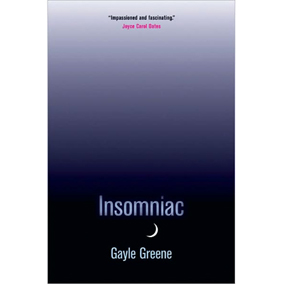
I am currently reading a book about insomnia. I have been struggling with sleep the last few months and thought that the book would be a nice educational interlude to my feast of fiction novels during the month of January. The book, Insomniac by Gayle Greene, discusses the many aspects surrounding sleep and insomnia and is a great resource to those interested in learning more about such topics.
One of the reoccurring statements the author makes about insomniacs is their resilience. As a person who struggles watching others' suffering (whether that is due to my profession or some innate characteristic bestowed on me at birth), I ache for the people described in the book to be struggling to find jobs and doctors that will help them manage their insomnia. I suppose the point I am trying to make is that though they struggle to make it through the day, they try to do so.
I am not naive to think that if one is sick, one might certainly rest. Having attended school and work while battling illness, I know taking time off for healing is not always feasible and I understand that illness and health mean different things to different people, however, I commend those that are focused on returning to health and/or do not accept the condition as part of life.
Watching my brother sleep while a mild fever ran rampant through his body and his coughs strained to remove the buildup in his lungs was enough for me. I know colds come and go and each time our bodies become more resilient to the virus, but it was hard to watch it manifest in a lack of appetite and energy (two things my brother is not known for). It seemed as though my brother had suspended his healing process and it made me far more protective than I normally would have been. Hopefully he will be feeling better (physically and mentally) tomorrow.

I am currently reading a book about insomnia. I have been struggling with sleep the last few months and thought that the book would be a nice educational interlude to my feast of fiction novels during the month of January. The book, Insomniac by Gayle Greene, discusses the many aspects surrounding sleep and insomnia and is a great resource to those interested in learning more about such topics.
One of the reoccurring statements the author makes about insomniacs is their resilience. As a person who struggles watching others' suffering (whether that is due to my profession or some innate characteristic bestowed on me at birth), I ache for the people described in the book to be struggling to find jobs and doctors that will help them manage their insomnia. I suppose the point I am trying to make is that though they struggle to make it through the day, they try to do so.
I am not naive to think that if one is sick, one might certainly rest. Having attended school and work while battling illness, I know taking time off for healing is not always feasible and I understand that illness and health mean different things to different people, however, I commend those that are focused on returning to health and/or do not accept the condition as part of life.
Watching my brother sleep while a mild fever ran rampant through his body and his coughs strained to remove the buildup in his lungs was enough for me. I know colds come and go and each time our bodies become more resilient to the virus, but it was hard to watch it manifest in a lack of appetite and energy (two things my brother is not known for). It seemed as though my brother had suspended his healing process and it made me far more protective than I normally would have been. Hopefully he will be feeling better (physically and mentally) tomorrow.
Subscribe to:
Posts (Atom)